Learning Pathway for Debtors’ Clerks
Customer Records
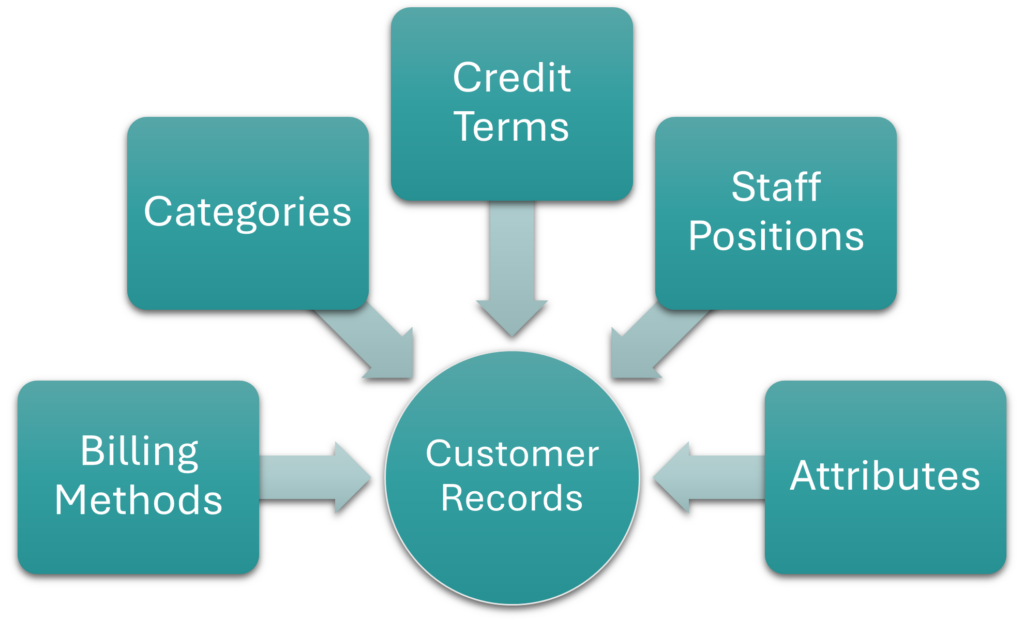
| Billing Methods | Billing methods refer to the ways in which customers must pay their accounts (e.g. debit order, EFT, SWIFT). The same billing methods are used for customers and suppliers. Billing methods: Explains the fields, buttons, and available features for displaying, creating or editing billing methods and provides step-by-step instructions for creating and editing billing methods. |
| Categories | Categories allow you to sort customers or supplier records and transactions for reporting purposes. The same categories are used for customers and suppliers. However, they can be differentiated by using prefixes. Categories: Step-by-step instructions for creating categories. |
| Credit Terms | Credit terms are the payment terms offered to customers. The same credit terms are used for customers and suppliers. Credit terms: Explains the fields, buttons, and available features for displaying, creating, or editing credit terms and provides step-by-step instructions for creating and editing credit terms. |
| Positions | Positions allow you to identify the people working for customers (e.g. Accounts, Rep, CEO). The same positions are used for customers and suppliers. Positions: Step-by-step instructions for creating positions. |
| Attribute Sets Entities | Attributes are used to capture additional information such as currencies, bank details, and addresses. Attribute Sets Entities: Explains all the available attribute sets that can be added to customer records. |
| Custom Attributes | Custom Attributes can be created to capture bespoke information on customers. Custom Attributes: Step-by-step instructions for creating custom attributes and adding them to customer records (contacts). |
| Customer Records | All the customers’ static information. Customers are part of Contacts. Customer Records List and Edit Views: Explains the fields, buttons, and additional features available when creating or editing customer records. Customer Records Tutorials: Step-by-step instructions for displaying, creating, editing, and deleting customer records. |
Customer Age Analysis and Ledger
| Customer Age Analysis and Ledger | The customer age analysis and ledger which are part of the same interface. Customer Age Analysis and Statements: Explains the fields, buttons, and available features for displaying the customer age analysis and generating statements. Customer Detailed Ledger: Explains the fields, buttons, and available features for displaying the customer ledger. Customer Age Analysis and Ledger Tutorials: Step-by-step instructions for displaying the customer age analysis and ledger and using the available features. |
Transaction Types and Transactions
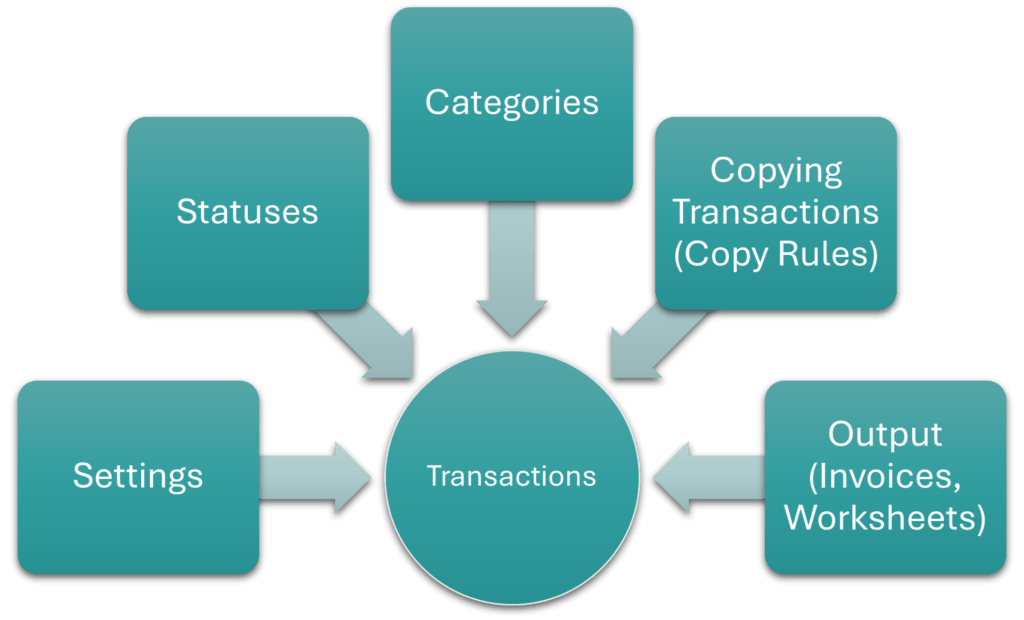
| Transaction Types | Transaction Types create the rules and environment for capturing transactions (e.g. which accounts can be debited or credited, how VAT is treated, and which of the additional features (e.g. calendars, estimating) are available. Transaction Types List View: Explains the fields, buttons, and available features for displaying a list of Transaction Types. Transaction Types Edit View: Explains the fields, buttons, and available features for creating or editing Transaction Types. Transaction Type Tutorials: Step-by-step instructions for creating Transaction Types. Each tab (1 – 5) is explained in detail below: 1. Transaction Type Settings: Part of creating Transaction Types. Explains the available settings, when to apply them and how to add them. 1a. Followers: Part of Transaction Type settings. Followers are the email recipients that receive the Output (e.g. Quotes, Invoices). Provides step-by-step instructions on using the followers’ feature. 2. Copying Transactions (Copy Rules): Part of creating Transaction Types. Explains the rules that determine when a transaction can be copied to create a new transaction (e.g. Quotation to Customer Invoice). Also explains how to set up manual or automated copying of transactions. 2a. Linking Transactions: Part of Copying Transactions. Background information on what a transaction flow is and how it is created. 3. Transaction Type Statuses Interface and Tutorials: Part of creating Transaction Types. Explains how to create and edit statuses, including rules such as when a transaction can be edited, is posted to the ledger, or affects inventory. 4. Transaction Categories Interface and Tutorials: Part of creating Transaction Types. Allows transactions to be grouped to extract analytical data from it. Explains the fields, buttons and provides step-by-step instructions for creating and editing categories. 5. Transaction Types Output Tab: Part of creating Transaction Types. Output refers to the forms or documents that are created from the transaction (e.g. Quotation, Invoice, Worksheet). Explains how to link Output to the transaction type and the related settings. |
| Transaction Type Examples | Customer Transactions: Setup Example – Quotations Setup Example – Customer Invoices Setup Example – Customer Credit Notes Setup Example – Delivery Notes Setup Example – Customer Journals Setup Example – Customer Receipts |
| Transactions | Explains the features of capturing transactions and the available transaction list reports. General Transaction Features: Explains the features available to all transactions and the rules (e.g. for pricing and quantities) that applied. Transactions List View Interface: Explains the fields, buttons, and available features for viewing a list of transactions. Transactions List View Tutorials: Step-by-step instructions for using the available features when viewing transaction lists. Transactions Edit View Interface: Explains the fields, buttons, and available features for creating or editing transactions. Transactions Edit View Tutorials: Step-by-step instructions for creating, editing, and deleting transactions. Transaction Warnings and Troubleshooting: Lists transaction warnings and errors and explains how to resolve them. Ledger Transaction Tutorials: Detailed instructions for capturing specific ledger transactions: Bad Debts, Discount Allowed, Discount Received, Foreign Exchange Transactions, Hire Purchase Agreements, Payroll Transactions, Periodic Journal Entries (Inventory Movements). Transaction Allocations: (Refers to allocating payments to invoices.) Explains the fields, buttons, and additional features available when allocating transactions. Provides illustrated step-by-step instructions to allocating transactions. |
| Transaction Examples | Brief explanations and screenshot examples of transactions. Transaction Examples – Customers: Invoices, Credit Notes, Delivery Notes, Customer Receipts. Transaction Examples – Ledger: Bank Payments, Bank Receipts, and various Journal Entries. |
General Ledger
| Ledger (optional) | Customer transaction lists can be viewed from the ledger and from the individual transaction modules. Ledger List Views: Explains the fields, buttons, and additional features available when displaying ledger entries or transactions. Ledger Tutorials and Troubleshooting: Step-by-step instructions on displaying ledger transactions and using the related functions. |
Point of Sale
| Point of Sale (If applicable) | Point of Sale (PoS) provides an interface to count and record cash on hand. It allows multiple users and tills. It also displays the cash sales recorded on a dashboard. Point of Sale Setup Interface: Explains the fields, buttons, and additional features available when setting up PoS. Point of Sale Setup Tutorials: Step-by-step instructions on setting up PoS. Point of Sale Interface: Explains the fields, buttons, and additional features available when using the PoS interface. Point of Sale Tutorials: Step-by-step instructions on using PoS. |
Learn More
- Learning the Basic Functions of QuickEasy BOS: The basic features of QuickEasy BOS.
- Learning Pathway for Accountants / Bookkeepers: Entities, currencies, transactions, ledger, financial statements, and VAT.
- Learning Pathway for Creditors’ Clerks: Supplier records, reports, and transactions.
- Learning Pathway for Customer Relations: Helpdesk, customer relations, service tickets, and contacts.
- Learning Pathway for Estimators: Items and estimating features.
- Learning Pathway for Human Resources: Contacts, service manager, and timekeeping.
- Learning Pathway for Production Managers: Production planning and related features.
- Learning Pathway for Project Managers: Project service tickets and related features.
- Learning Pathway for Sales Reps and Managers: Customer records and transactions, service manager for sales leads.